
Getting a Garage Door Ready for Winter in Crowley, TX
The short answer: lubricate the moving parts, check the weatherstripping, test the springs and balance, and make sure the opener's battery backup actually works, before the first hard freeze shows up. North Texas winters don't bring months of snow, but they do bring sudden temperature swings, the occasional ice storm, and plenty of dry, cold wind that finds every gap in a garage door system. A little prep now saves you from a stuck door or a snapped spring on the one morning you need to leave the house early.
Why Cold Snaps Are Harder on Garage Doors Than People Expect
Garage doors in this part of Texas spend most of the year dealing with heat, so owners often assume cold isn't a big deal. But a 40-degree overnight temperature drop, which happens more than once each winter here, causes metal springs and rollers to contract. Lubricant that worked fine in August can thicken or dry out, metal-on-metal contact increases, and springs under tension become more likely to fail when the steel is cold and brittle. If your area sees a stretch of hard freeze or ice, that stress compounds. None of this requires a true winter climate to matter, just a cold morning and a door that hasn't been serviced since spring.
Steps to Take Before the Temperature Drops
- Lubricate springs, hinges, rollers, and tracks. Use a silicone-based or lithium-based garage door lubricant, not household oil like WD-40, which can attract dust and grit and gum up over time. This single step cuts down on the grinding, popping noise that shows up on the first cold morning of the season.
- Inspect the weatherstripping along the bottom and sides. Texas heat dries out and cracks rubber seals faster than people realize. Cracked or brittle weatherstripping lets in wind, dust, and cold air, and it's an easy, inexpensive fix compared to dealing with a drafty garage all winter.
- Test the door balance. Disconnect the opener, lift the door halfway by hand, and let go. It should stay in place. If it drifts up or falls, the springs are out of balance, and that imbalance gets worse, not better, in cold weather. This is not a DIY spring adjustment job; the tension involved can cause serious injury.
- Check the auto-reverse safety feature. Place a block of wood or a roll of paper towels in the door's path and close it. The door should reverse on contact. Cold weather can affect sensor alignment and opener response time, so this is worth testing every season, not just once.
- Clean and realign the photo-eye sensors. Dust, wind-blown debris, and even condensation from temperature swings can throw off the sensors near the bottom of the tracks. A misaligned sensor will refuse to close the door at all, which is a frustrating discovery on a freezing morning when you're trying to leave for work.
- Look at the garage door opener's battery backup. Cold weather is hard on batteries, and ice storms in this region occasionally cause brief power outages. If your opener has battery backup, test it now. If it doesn't have one, it's worth asking about adding it before winter weather actually arrives.
Dealing With Occasional Ice
True ice events are not common in this part of Texas, but they do happen, and when they do, garage doors take the hit in a few specific ways. Ice can form around the bottom seal and literally freeze the door to the slab, especially if there's standing water or condensation on the garage floor. If that happens, don't force the opener; it can strip the gears or damage the track. Instead, use warm water or a hair dryer to loosen the ice at the bottom edge before operating the door. It's also worth keeping the area just outside the door clear of ice buildup, since a slick driveway combined with a heavy door is a bad combination if something needs manual adjustment.
Insulation Matters More Than People Think
A lot of homes in this area have single-layer, non-insulated garage doors, which made sense when the main concern was summer heat radiating in. But an uninsulated door also does a poor job keeping cold air out, which matters if the garage shares a wall with living space, holds a water heater, or stores anything sensitive to temperature swings. If you're due for a new door anyway, an insulated model is worth the upgrade conversation, both for winter performance and for keeping the garage more stable in the summer heat that dominates most of the year here.
Signs You Shouldn't Wait On
A few symptoms mean it's time to stop doing DIY maintenance and get a technician out: a loud bang or pop from the spring area, a door that feels noticeably heavier than usual when lifted manually, visible gaps in the coil of the torsion spring, or an opener that struggles and reverses without an obstruction. These point to spring wear or opener strain that gets worse, not better, once cold weather sets in.
When to Call Crowley Garage Door Specialists
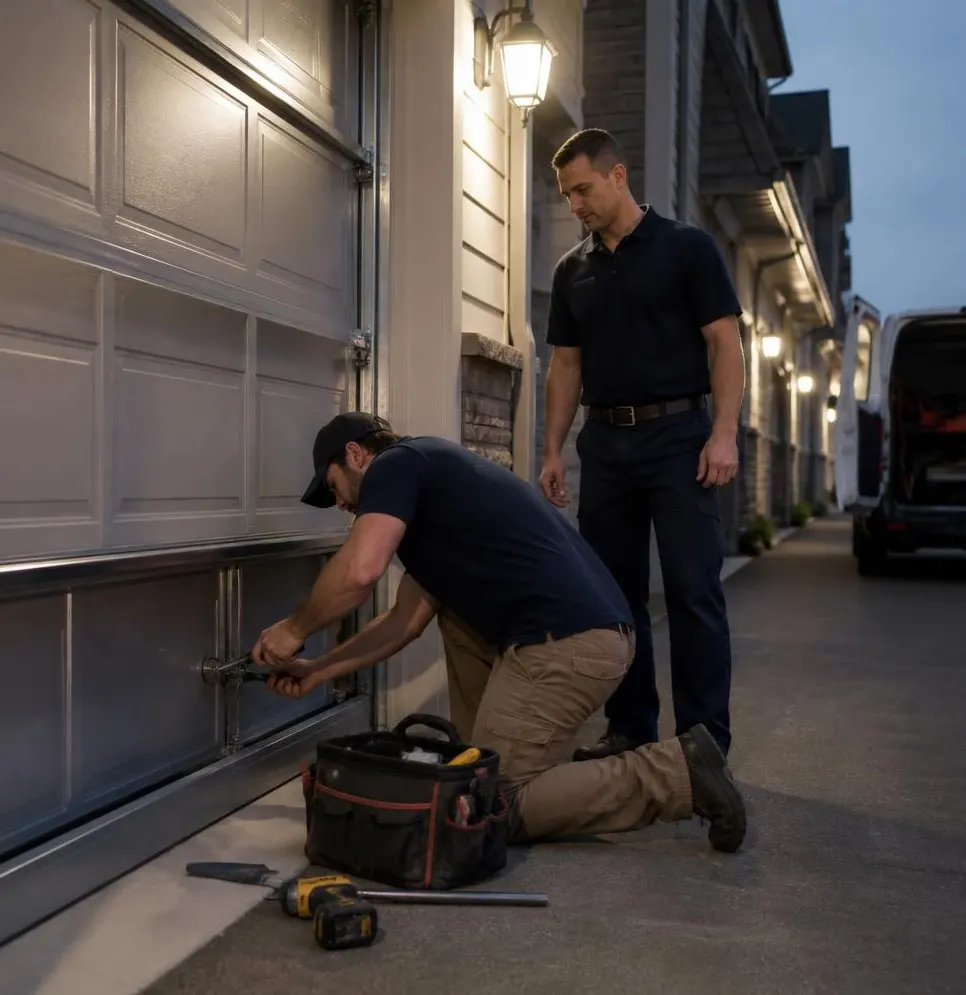
If your door is out of balance, the springs look worn, or the opener isn't responding reliably, it's time to call in a professional rather than troubleshoot further on your own. Crowley Garage Door Specialists handles spring replacement safely, with the right tools and tension equipment, and also offers full garage door maintenance visits that cover lubrication, hardware tightening, sensor alignment, and weatherstripping replacement in one trip. That kind of seasonal tune-up is the easiest way to head off a cold-morning breakdown before it happens.
If you're in Crowley, Burleson, Fort Worth, Mansfield, Joshua, Cleburne, Alvarado, or Kennedale and want your garage door checked before winter weather hits, give Crowley Garage Door Specialists a call. We'll get it running smoothly and keep it that way through the season.