
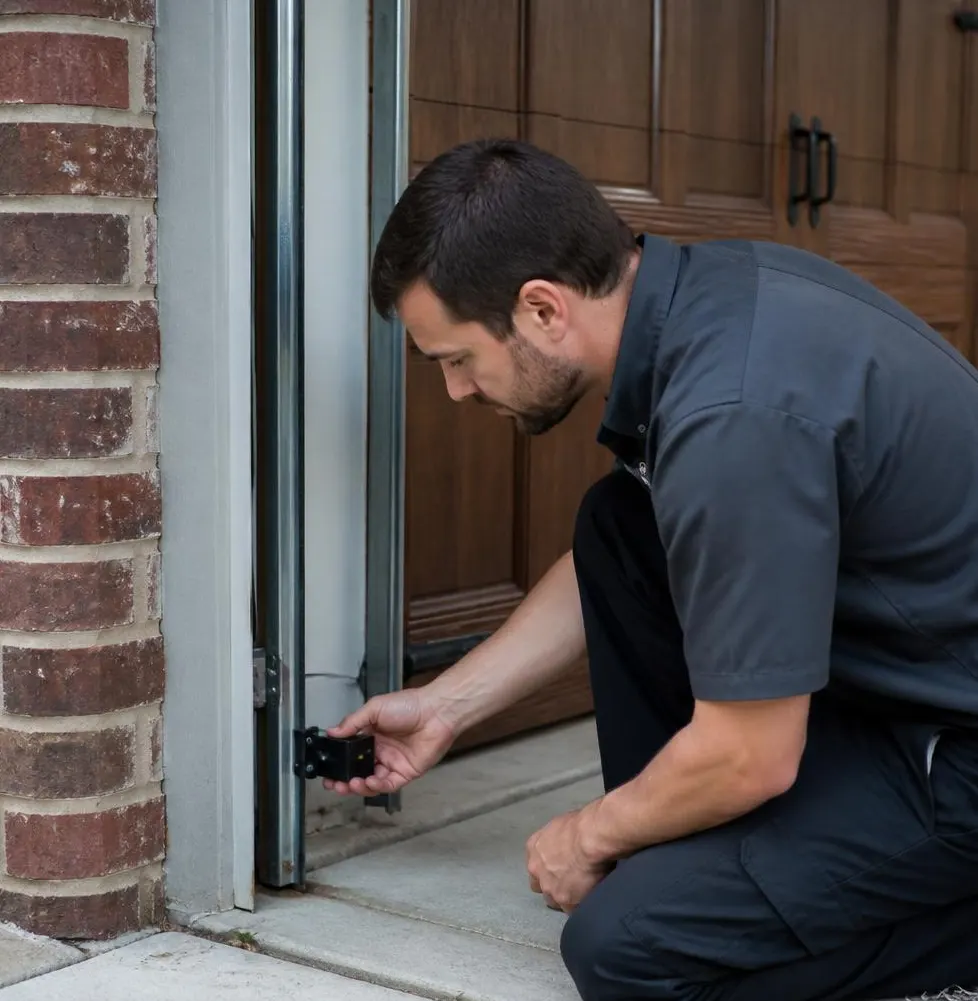
What a Technician Sees After a Wind Event
A typical post-storm call starts the same way: a homeowner opens the garage the morning after a line of storms and finds the door won't move, or it moves but makes a grinding noise it never made before. On closer look, there's often a bowed panel where wind pressure pushed the door inward, rollers popped halfway out of the track, or a bent top section where the door flexed past what the hardware could handle. Sometimes the opener trolley has been ripped loose from the rail entirely, because the door tried to lift under wind load and the opener took the full force of it. None of this is rare out here. Fall in North Texas brings a second severe weather season as strong cold fronts push through, and the wind, hail, and blowing dust that come with those fronts put real stress on a part of the house most people never think about structurally.
Why the Garage Door Is the Weakest Point in the Wall
A garage door is usually the single largest opening in a home's exterior, often seven to sixteen feet wide and seven to eight feet tall, built from thin steel or aluminum panels rather than the framed, insulated wall around it. When straight-line winds hit the front of a house, that door takes more direct pressure per square foot than almost any other surface. If it buckles or blows in, wind suddenly has a way into the structure. Once air is pushing into the garage instead of around the house, it pressurizes the space from the inside, which puts extra load on the roof and interior walls that were never designed to handle it. This is the same physics that shows up in wind damage claims after hurricanes along the Gulf Coast, just on a smaller scale with the squall lines and downbursts that move through Tarrant and Johnson County in spring and fall. A door that holds is doing more than protecting what's parked inside it.
Hardware Checks That Matter Before Storm Season
Tracks, Rollers, and Fasteners
Loose track brackets and worn rollers are the first thing to fail under repeated wind flex. Walk the tracks and check that every bolt is tight, that the track itself is still straight and not bowed away from the wall, and that rollers spin freely without wobbling side to side. Dust and grit, which this area gets plenty of between storms, work their way into roller bearings and accelerate wear, so a quick lubrication pass before storm season keeps things moving the way they should instead of binding and forcing the opener to work harder.
Panels and Reinforcement
Older doors, especially ones installed before wind-load ratings became common, often have no horizontal bracing at all. A reinforcement strut kit, bolted across the back of each panel, spreads wind pressure across the whole door instead of letting it concentrate on one weak section. It's a relatively low-cost add-on compared to full replacement, and for a door that's otherwise in good shape it's often the better trade-off. If a door already shows rust at the seams, hail dimpling, or a panel that's visibly out of square, reinforcement is patching a problem that's going to keep growing, and replacement with a door carrying a proper wind rating is the more honest long-term fix.
Weatherstripping and Seals
Bottom seals and side weatherstripping take a beating from blowing dust and wind-driven rain. Cracked or flattened seals let water and grit into the garage during a storm and also mean the door isn't sealing tight enough to resist wind pressure the way it was designed to. Replacing these is inexpensive and worth doing as routine maintenance, not just a repair.
Opener and Backup Power
A door under wind load puts extra strain on the opener, and a storm that knocks out power at the same time it's testing the door's hardware is a bad combination. Check that the opener's force settings aren't set so loose that the door struggles against resistance, and confirm the auto-reverse safety feature is working. If the opener doesn't have battery backup, that's worth considering, since losing power during a storm with the door stuck half-open is a common and preventable problem.
Manual Locks
For doors that get left closed for extended periods, an auxiliary slide lock on the inside adds a layer of physical resistance against wind trying to force the door inward, separate from whatever the opener is doing to hold it in place.
When to Call Crowley Garage Door Specialists
If a door is bowing visibly in wind, making new grinding or popping noises, or struggling to open and close smoothly, that's worth a service call before the next line of storms rather than after. Our Garage Door Maintenance visits cover the track, roller, spring, and seal checks described above, catching the small issues before they turn into a jammed or damaged door mid-storm. If a door has already taken damage, whether that's a bent panel, a spring that's lost tension, or an opener that's no longer tracking correctly, our Emergency Garage Door Service gets a technician out quickly so the opening doesn't sit vulnerable while you wait.
If you're in Crowley, Burleson, Fort Worth, Mansfield, Joshua, Cleburne, Alvarado, or Kennedale and want your garage door checked out before the next round of fall storms rolls through, give Crowley Garage Door Specialists a call. We'll get it done right and get you back to a door that holds.